Gungdo for Beginners: Korea's Traditional Archery Explained
If you've seen footage of Korean archers hitting a door-sized target from a great distance, you've probably come across gungdo.
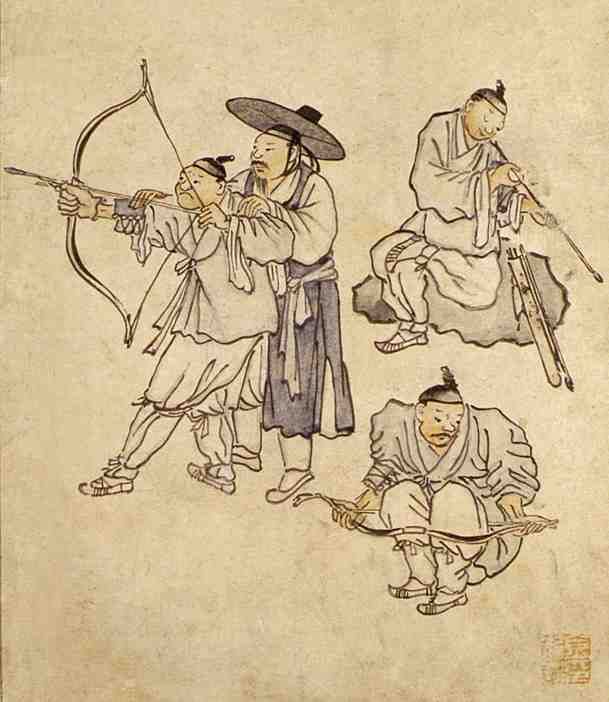
If you've seen footage of Korean archers hitting a door-sized target from a great distance, you've probably come across gungdo. This martial art is visually impressive and still actively practiced today. Despite its striking appearance, it is quite accessible — clubs throughout South Korea welcome newcomers, and more are starting internationally.
Here's what you should understand before selecting a bow, including notes on where terminology is genuinely debated, as even Korean sources do not fully agree.
Terminology
English-language sources vary in terminology for this practice, and this inconsistency isn't mere carelessness — it reveals genuine historical complexity. Here's an overview:
- Gungdo (궁도, 弓道) — meaning "the way of the bow," is a term primarily used in English journalism and among international practitioners. Some Korean sources mention that this term was officially adopted as a sport name during the Japanese colonial era (1910–1945), which leads a few Korean sources to consider it somewhat less "native" compared to other terms.
- Gukgung (국궁, 國弓) means "national bow" and is commonly used in modern Korean academic contexts to differentiate traditional Korean archery from yanggung (양궁, 洋弓), which refers to Western or Olympic-style target archery. In 1983, the Korea Archery Association officially separated its traditional (gukgung) and Olympic (yanggung) management into distinct organizations. This administrative split continues to influence how Koreans discuss these two forms of archery today.
- Gungsul (궁술, 弓術) — an older, more literary term meaning "techniques of the bow," found in military and administrative documents from the Joseon era.
- Hwalssogi (활쏘기) is a native Korean term meaning "shooting a bow." The South Korea Cultural Heritage Administration officially designated this practice as National Intangible Cultural Heritage No. 142 on July 30, 2020. This term is a simple Korean expression, not Sino-Korean, and it commonly appears in records from the Goryeo and Joseon periods.
- Gakgung (각궁, 角弓) specifically refers to the bow itself, the horn composite bow, rather than the sport. While it's sometimes casually used to represent "traditional Korean archery" in informal English, this is a slight misinterpretation—Korean speakers generally see gakgung as an object, not an activity.
Throughout this article, "gungdo" will be the primary term since it's the form most beginners will come across in English. However, "gukgung" and "hwalssogi" are used interchangeably to refer to the same practice.
What Is Gungdo?
Gungdo/gukgung is a traditional form of archery that features a unique horn-and-sinew composite bow, emphasizes a single, notably long shooting distance, and fosters a club culture influenced by Confucian etiquette alongside skill in marksmanship.
Archery has a long and well-documented history in Korea. Murals from the Goguryeo kingdom (37 BCE–668 CE) depict archers, and records from the Joseon dynasty discuss it extensively. Some popular stories should be viewed as legends rather than verified history — for example, the claim that Go Jumong, the founder of Goguryeo, could catch five flies with a single arrow. This is a myth, not a historical fact, but it reflects how Koreans have traditionally emphasized archery's cultural significance.
Archery's official role is well recorded: it was a mandatory part of the Joseon military service exam, conducted nearly every year from 1392 to 1894. Korean composite bows stayed important militarily even after firearms were introduced. Historical accounts mention Korean archers aiding in repelling Japanese troops at the Battle of Haengju and the Battle of Ulsan during the Imjin War of the 1590s, alongside the use of the newly adopted arquebus.
Gungdo's current standardized form originated in 1899. Korean historical accounts and a 2019 study by Na Yeong-il describe how Prince Heinrich of Prussia, during his visit to the Korean Empire as a naval commander, observed an archery demonstration, was impressed, and recommended that the sport be promoted nationally. Emperor Gojong responded by issuing a decree encouraging archery practice to enhance physical strength. This led to the revival of existing archery clubs, such as Hwanghakjeong in Seoul, which still operate today. Over the following decades, including during Japanese colonial rule, the bow, arrows, and target distances were standardized to resemble their modern forms. A Korean textbook on archery, sometimes called Joseon-ui Gungsul in English, was published in 1929.
The Bow: Gakgung
The traditional bow is the gakgung (각궁), a small, heavily reflexed composite bow — commonly cited as under a meter unstrung. It's built with a bamboo core backed with animal sinew to add pulling power, and its belly is faced with water buffalo horn to add pushing power. The stiffened tip sections (siyahs) are typically made of mulberry or black locust wood. That horn-and-sinew combination gives the gakgung its outsized punch relative to its size — sources note that Japanese observers, comparing it to the much longer Japanese yumi, referred to it as a "half bow" despite its considerable force.
Cited draw weights differ by source, but most list traditional bows at over 20 kilograms (about 44 pounds). Max range figures also vary — some sources mention 350–500 meters for a fully drawn gakgung — so treat specific numbers as rough estimates rather than precise specifications. The town of Yecheon is frequently cited in English sources as producing a large portion of Korea's traditional horn bows, though the often-cited figure (around 70%) originates from an undocumented source, making it more of a common estimate than a definitive statistic. The craft of making traditional bows and arrows was officially recognized as a National Intangible Cultural Property in 1971, under the name gungsijang (弓矢匠, "bow-and-arrow maker").
As a beginner, you won't begin with a horn bow. Most clubs assign newcomers a modern laminated fiberglass or carbon bow — designed to match the traditional Korean profile but more durable and weather-resistant than a horn-and-sinew bow. Traditional gakgung and bamboo arrows are usually used by more experienced archers; several sources mention they are required only beyond a certain dan (rank) in national competitions.
The Release: Thumb Draw
The key technical difference between Gungdo and Western archery lies in how the string is drawn. Gungdo employs a thumb draw, where the string is hooked with the thumb and protected by a thumb ring, instead of being pulled with two or three fingers. This method is common in Central and East Asian archery traditions and is sometimes called the "Mongolian release" in English. The Korean thumb rings vary in shape and come in two styles: a "male" version featuring a small protruding hook and a "female" version that cushions the thumb joint. Although the underlying draw technique is related, these rings are constructed differently from those used by the Manchu, Mongol, and Turkic peoples.
Beginners usually begin with a basic three-finger draw before advancing to the thumb ring and the full thumb draw. Unlike Western archery, the arrow is shot from the right side of the bow instead of the left.
The Distance: 145 Meters
A key feature of gungdo is its standardized shooting distance of 120 bo, which translates to about 145 meters (roughly 160 yards) in most English sources. This distance is significantly farther than the 70 meters used in Olympic recurve archery. Consequently, gungdo is practiced exclusively outdoors in all seasons; some Korean clubs have covered and heated shooting lines to maintain winter training, but the range and target remain outside year-round.
Targets are large by necessity, typically measuring about 2 by 2.5 meters, with a rubberized surface that causes arrows to bounce off rather than stick. Some ranges feature electronic sensors and lights to signal hits, especially since striking from 145 meters can be hard to see. Due to safety rules for shooting at such distances, some archery sessions for visitors or beginners—especially tourist programs—use much shorter distances, sometimes just 10 meters, while still employing traditional equipment and form.
The Jeong: Archery Clubs
The Jeong: Archery Clubs
Gungdo is practiced at private clubs known as jeong (정), sometimes spelled "jung" in older English texts. This variation results from different transliteration systems, which convert Korean sounds into Latin letters. Earlier systems typically wrote 정 as jung, whereas the current standard, Revised Romanization, spells it as jeong.
Jeong are typically situated on scenic elevated locations such as mountainsides, city parks, or riverbanks, with the target area usually 145 meters below or across. Seoul alone features approximately nine jeong, and an emerging estimate suggests there are over 300 clubs across the country. Precise numbers fluctuate since joining national federations isn't compulsory for club registration, and over time, reporting has become less comprehensive, as noted by some academic sources on the sport's administrative history.
Because jeong are private, membership-based communities, finding one and getting an introduction — especially for a first-time visitor or a non-Korean — can require some effort. University archery clubs have also grown significantly in recent years: a 2023 survey reported around 800 students across 24 clubs nationwide, a sharp increase since the national university federation was established in 2018. Much of this growth is due to renewed interest in Korean heritage practices among younger Koreans. The easiest way to start is often to contact a local or university club or an English-speaking practitioner online before visiting in person.
Club culture plays a vital role in its appeal. Members are expected to dress smartly—traditionally, this means white shirts, pants, and shoes—and to respect a hierarchy based on age, rank, and how long they've been members. After practice, sharing meals is a common tradition. Much of this etiquette originates from a long-standing Confucian perspective that views archery as a test of self-discipline and character rather than just aiming at a target. This perspective also explains why archery was historically seen as an acceptable martial activity even for the Confucian literati, unlike other more overtly martial pursuits.
A Few Traditions Worth Knowing
- Before starting a session, an archer usually says a phrase like "Hwal bae oom ni da" (meaning "I'm learning the bow"), and others might reply with "Mani ma chu sayo" (meaning "Have many hits"). Transliterations differ across sources since these phrases are phonetic and not standardized.
- A first successful shot—an arrow hitting the target without disturbing its plane—is viewed as a minor personal achievement, often celebrated by bowing to the target.
- Once earned, the dan (rank) is usually held for life and often prominently displayed at the clubhouse.
Getting Started
If you're outside Korea, finding gungdo or gukgung can be challenging but not impossible — a few clubs and traditional archery groups around the world offer Korean-style shooting. In Korea, the best options are usually university archery clubs, expat-friendly community groups, or directly asking a jeong to observe before signing up for lessons. Some cities also provide short, tourist-oriented sessions that focus on form and etiquette at a simpler, safer distance.
No matter which path you choose, your initial sessions will mostly focus on standing, holding, and drawing without releasing, rather than actual shooting. This is typical and aligns with a tradition that emphasizes the archer's form and patience as much as the arrow's flight.
Sources and Methodological Notes
This article utilizes a blend of English-language academic sources, journalism, statements from museums and heritage organizations, and in-depth practitioner writings, cross-verified rather than depending on a single source.
- Kim, Ki-hoon. "Korean Archery: Modern Transition and Development," in Chinese Archery Studies (Springer, 2023) — discusses the administrative split between gukgung and yanggung, includes caveats about club registration, and confirms that the episode involving Prince Heinrich and Emperor Gojong is the focus of specific academic research (citing Na Yeong-il, 2019).
- Korea.net, the official portal of the Republic of Korea government, and the Cultural Heritage Administration—concerning the 1971 gungsijang and the 2020 hwalssogi (National Intangible Cultural Heritage No. 142) designations—and the ceremonial/martial (yesa/musa) framing of historical archery.
- World Archery and Korea Times (2024) report on current club memberships, the expansion of university archery, and practitioners' experiences with the jeong system.
- English-language encyclopedic sources, such as Wikipedia's "Gakgung" article and its mirrors, are used carefully and only to support claims verified through other sources. This caution is necessary because some online figures, like the Yecheon bow-production percentage and certain maximum-range data, come from uncertain sources.
- Thomas Duvernay's writing on Korean Traditional Archery and related practices, focusing on equipment terminology and club etiquette. It stands out as one of the few detailed English-language resources created by a long-term practitioner and Korean studies scholar.
When sources conflict or a claim lacks a clear original source, it is indicated in the text above—such as specifics on draw-weight, range figures, Yecheon production percentage, and traditional spoken phrases—rather than being stated as definitive fact. Korean terms are provided in Revised Romanization whenever possible, with older McCune-Reischauer spellings included when frequently found in English sources.