The Hwarang: Korea's Flower Knight Warriors, Explained
Somewhere around the middle of the 6th century, the kingdom of Silla — one of three rival states vying for control of the Korean peninsula — made an unusual bet. Instead of building its future army purely from hardened soldiers, it built it from teenagers.
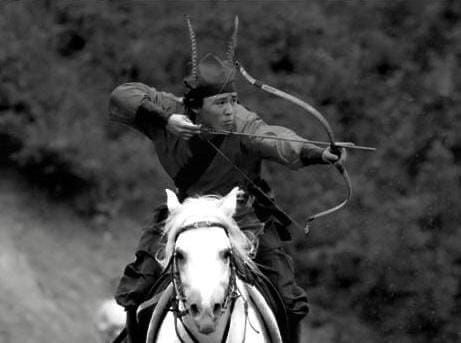
Somewhere around the middle of the 6th century, the kingdom of Silla — one of three rival states vying for control of the Korean peninsula — made an unusual bet. Instead of building its future army purely from hardened soldiers, it built it from teenagers. Beautiful, well-bred, poetry-writing teenagers who spent as much time hiking sacred mountains and composing verse as they did training with swords and bows.
They were known as the Hwarang (Hangul: 화랑; Hanja: 花郞; literally "flowering youths" or "flower knights"). The name sounds soft. The history behind it — and the historiography built on it — is considerably more complicated than the popular version suggests.
A Note on Sources, Before We Start
It's important to recognize that no existing 6th-century document directly references the Hwarang. Our knowledge is mediated through two histories from the Goryeo period, written centuries later: the Samguk Sagi (History of the Three Kingdoms, 1145, compiled by Kim Pu-sik) and the Samguk Yusa (Memorabilia of the Three Kingdoms, roughly 1280, compiled by the Buddhist monk Iryeon). Both sources claim to be based on earlier materials now lost, which include a memorial stele by 9th-century scholar Choe Chi-won, a Tang dynasty account of Silla called Xinluo guoji, and an 8th-century Silla chronicle named Hwarang Segi (Chronicle of the Hwarang), attributed to Kim Daemun.
Reputable historians recognize the importance of that gap and approach the Hwarang record cautiously rather than accepting it at face value. In the late 1980s, a manuscript claiming to be the lost Hwarang Segi appeared in Gimhae, South Korea; however, scholars like Richard McBride considered it a modern forgery instead of an authentic ancient document. Additionally, sinologist Richard Rutt noted in a 1961/1972 study that the evidence supporting the idea of the Hwarang as a structured combat force is limited. He suggested that the earliest traditions depict an aristocratic group focused more on beauty, ritual, and Buddhist devotion rather than military training. The Samguk Sagi, compiled by a court official, highlights their military achievements, whereas the Samguk Yusa, written by a monk, emphasizes their religious activities. Determining which version more accurately reflects 6th-century reality remains an open scholarly question, and this ongoing debate is part of the honest history of the Hwarang.
With that caveat in mind, here is what the sources — approached critically — reveal to us.
Where the Name Comes From
Hwarang merges 'hwa' (花, meaning "flower") with 'rang', a term for young men that also appears in Silla noble titles. Chinese observers, upon encountering the group, mostly noted their striking beauty. A Tang official's account, cited in the Samguk Sagi, describes Silla choosing handsome sons from noble families, dressing them finely, and calling them Hwarang—meaning "revered and served'—by the common people.
The institution's predecessor is documented in historical records. Both the Samguk Sagi and the Samguk Yusa mention two early groups of young women called the Wonhwa (源花, meaning "original flowers" or "wellspring flowers"), chosen for their beauty and trained in loyalty and morality. Reports indicate that the two Wonhwa leaders, Nammo (南毛) and Junjeong (俊貞), became jealous of each other, leading to the collapse of the system. Subsequently, the organization was restructured to include young noblemen. However, some modern scholars advise caution in interpreting this account, as it lacks a specific date and may have been altered by later, more patriarchal chroniclers who had limited information about the original episode.
Origins Under King Jinheung
The exact founding date remains debated among ancient sources: the Samguk Sagi cites 576 CE, the Tongguk Tonggam mentions 540 CE, and an entry in the Samguk Sagi refers to a Hwarang named Sadaham in 562 CE—before the institution's supposed founding. It is broadly accepted that the Hwarang began forming during the reign of King Jinheung of Silla (眞興王, r. 540–576 CE), who is recognized for choosing virtuous young men from noble families and officially naming them Hwarang. The first recorded Gukseon was a youth named Seolwon-rang.
A single Hwarang led a group of young men called Nangdo (郎徒, "disciples") or Hyangdo (香徒, "fragrant followers"), with numbers ranging from several hundred to several thousand, depending on sources. The most senior Hwarang, directly appointed by the throne, held the title Gukseon (國仙, "state immortal"), a term inspired by Taoist concepts of a transcendent sage living in the mountains.
Life as a Flower Knight
The Hwarang curriculum, according to the sources, resembled a mix of monastery, finishing school, and officer training rather than a traditional military academy.
- Hwarang bands embarked on journeys to mountains and rivers famed for their stunning scenery, trusting that direct engagement with nature fostered moral development.
- Poetry and music—Members created hyangga (鄕歌, "native songs"), Korea's earliest extant vernacular poetry, composed using the Chinese-character transcription system hyangchal (鄕札). Today, only around 25 hyangga remain, mainly preserved in the Samguk Yusa; some serve as elegies mourning fallen Hwarang.
- Their worldview was a blend of Korean Buddhism—especially their devotion to Maitreya, the future Buddha—native shamanistic traditions, Confucian ethics, and Taoist concepts of the immortal mountain sage.
- Martial training—including archery, swordsmanship, horsemanship, and hand-to-hand combat—complemented the education, equipping members to take on military command, sometimes as teenagers.
The system's ethical foundation is credited to Buddhist monk Won Gwang (圓光, c. 555–630 CE), who is said to have created the Sesok-ogye (世俗五戒), known as the "Five Secular Precepts" or "Five Commandments for Secular Life."
- Sa-gun-i-chung (事君以忠) — Serve the king with loyalty
- Sa-chin-i-hyo (事親以孝) — Serve one's parents with filial piety
- Gyo-u-i-sin (交友以信) — Treat friends with trust and sincerity
- Imjeon-mutoe (臨戰無退) — Never retreat in battle
- Salsaeng-yutaek (殺生有擇) — Exercise discrimination in taking life
The fourth precept — never retreat — marks the point where the flower imagery stops being a metaphor.
Warriors, Not Just Mystics
By the 7th century, Hwarang-trained commanders had become key figures in Silla's military efforts against rivals Baekje and Goguryeo, ultimately leading to the unification of the peninsula under Silla in 668 CE.
Kim Yu-sin (595–673 CE) is the most renowned figure to come from the system. He allegedly joined the Hwarang at age 15 and reached the rank of Gukseon by 18, eventually leading the entire Silla army and orchestrating campaigns that defeated Baekje and Goguryeo. Over time, Korean writers added legendary elements to his story—such as heavenly gold chests, guardian goddesses, and a descent from the god Shaohao. However, even Kim Pu-sik, the compiler of the Samguk Sagi, recognized these as likely embellishments rather than facts. Distinguishing the historical general from the myths surrounding him remains an ongoing challenge for historians, not a resolved issue.
A more detailed account is the death of Gwanchang, the son of Silla general Kim Pumil, during the Battle of Hwangsanbeol in 660 CE — a decisive conflict in Silla's conquest of Baekje. According to the Samguk Sagi, the outnumbered Baekje general Gyebaek managed to repel Silla's larger force five times, causing Silla's morale to flag. Kim Pumil sent his sixteen-year-old son alone into the Baekje camp. Gwanchang was captured; Gyebaek, reportedly moved by his youth, released him unharmed. However, Gwanchang immediately re-entered the fight. He was captured a second time, executed, and his body was sent back to the Silla lines strapped to his own horse. His death is credited with reigniting Silla's assault, which eventually broke Baekje's army. This brutal story is retold because it encapsulates the Hwarang ideal: that duty and honor surpass self-preservation.
Decline and Disappearance
The prominence of the Hwarang diminished with Silla's decline. As the kingdom weakened and Goryeo rose, the institution lost its military role and was never formally revived during the Confucian Joseon dynasty (1392–1910), which showed little tolerance for the old Buddhist-shamanist warrior cults. Although the term "hwarang' persisted, its meaning shifted away from "elite warrior-poet.' For instance, a 1527 Joseon text, the Hunmong Jahoe, uses it to refer to a male prostitute, and later in the period, it came to denote a male shaman. The martial legacy wasn't eradicated by official decree but was instead obscured over centuries through evolving language and shifting cultural values.
The 20th-Century Revival — and Why It Deserves Scrutiny
For almost a thousand years, the Hwarang were merely a historical footnote. That changed after Korea gained independence in 1945 when the Hwarang were rediscovered and intentionally promoted as a national symbol — embodying a local warrior-scholar ideal that Korea, now independent, could proudly compare to the samurai or Knights of the Round Table. This pattern is common in modern nation-building: societies often reach back into a distant, minimally documented past, filling the gaps with a positive, morally upright origin story. Scholars studying Korean history have pointed out that 20th-century nationalist narratives tended to shape the Hwarang into "proto-modern" warriors with a clear, unified martial purpose—an interpretation that the incomplete sources do not fully support.
This revival is also where most people first come across the Hwarang today, primarily through martial arts branding. That link, however, warrants a more detailed and cautious examination than it typically gets.
What Modern Martial Arts Actually Inherited
Techniques. In truth, no methods can be confirmed as unique to Hwarang. No technical manuals from 6th or 7th-century Silla remain, and historical accounts mention what the Hwarang practiced—archery, swordsmanship, horsemanship, hand-to-hand combat—but never detail how they trained. The only somewhat named system is Um-Yang Kwon (陰陽拳, "yin-yang fist"), claimed by Hwa Rang Do founders to have been taught by a private instructor. This is a 20th-century oral account about one individual's training, not an ancient, documented curriculum. Aside from stating they trained with contemporary standard weapons and combat arts, any other specifics are reconstructions rather than well-recorded facts.
Lineage. The paper trail becomes faint quickly. Hwa Rang Do, established in 1960 by brothers Joo Bang Lee and Joo Sang Lee, traces its combat tradition to a monk named Suahm Dosa. He allegedly began teaching the brothers when they were just four and five years old in the early 1940s at a temple in what is now North Korea. According to the official history, Suahm Dosa was the 58th in a line of secret Hwarang combat masters — Um-Yang Kwon — passed down from monk to disciple since the early Joseon dynasty. He is said to have transmitted this knowledge solely to Joo Bang Lee just before passing away in 1969.
Martial arts historians and some sympathetic practitioners often point out several issues with this claim: there is no independent record of Suahm Dosa's existence apart from the Lee family's account; his mountain hermitage was reportedly burned after his death, following religious custom, which erased any physical trace; only the Lee brothers knew the 'secret' system, and their documented training also includes conventional Hapkido under well-known teacher Choi Yong-sul, with techniques resembling some Hwa Rang Do material. The organization's stance is that the lineage was intentionally kept oral and secret, passed to one disciple per generation—an unfalsifiable explanation by design. Honestly, one should view '58 generations' as a founding myth, a legitimizing origin story for a mid-20th-century martial art, rather than a verifiable chain of custody from centuries past.
Philosophy is the most portable aspect because it doesn't demand continuous technique transmission—only the Sesok-ogye's five core values: loyalty, filial piety, peer trust, courage, and judicious use of force. These principles often appear verbatim in dojang creeds, black-belt oaths, and tenet boards across Taekwondo, Hapkido, and Hwa Rang Do schools worldwide. Functionally, they serve as a martial arts code of conduct—a framework of discipline and respect layered onto modern teaching methods. Instructors can legitimately cite Won Gwang's 7th-century precepts as the authentic textual source, given the relatively well-documented record.
Historical Debate: While there is no dramatic discovery to report, scholarly discussions are ongoing on multiple fronts. Researchers continue to scrutinize whether the 1989 Gimhae Hwarang Segi manuscript is a modern forgery—most, like Richard McBride, still believe it is. Archaeological efforts are also underway to explore mid-Silla (654–780 CE) Buddhist relics and pagodas, offering indirect insights into the religious environment of the Hwarang. Additionally, comparative institutional studies, such as Maurizio Riotto's 2012 work, compare the Hwarang to other ancient "youth corps" worldwide. The core debate remains interpretive: how much emphasis to place on the Samguk Sagi's martial portrayal of the Hwarang versus the religious perspective in the Samguk Yusa. This disagreement remains unresolved and likely will remain so, given the limited surviving records.
The global influence of the Hwarang outside Korea is mainly due to the Korean diaspora's martial arts exports from the 1960s to 1980s, rather than through any direct international engagement with Hwarang history. Hwa Rang Do was introduced to the US beginning in 1969, then spread to Europe—particularly Italy, which developed one of the largest Hwa Rang Do communities outside Korea, along with schools in the Netherlands and Germany, primarily through demonstration tours by the Lee family. Apart from practitioners of Korean martial arts, the Hwarang have little independent recognition in world martial arts culture — they are not referenced by non-Korean traditions as frequently as Shaolin monks or samurai bushido.
Cultural Footprint Beyond the Dojang
The Hwarang have largely become recognizable elements in pop culture, especially through the 2016–2017 KBS2 drama Hwarang: The Poet Warrior Youth. This series brought the legend to a worldwide audience with a very loose interpretation of history — keeping the main appeal even if the details are not accurate.
Why the Hwarang Still Matter
Strip away the poetic language, flower imagery, and much of 20th-century refinement, and what remains is a truly unique concept: a warrior tradition that consistently integrated combat training with moral and artistic development, at least in its own view. Whether Silla actually practiced this way or if later chroniclers and nationalist historians shaped the narrative is still debated by serious historians. This debate is important to keep in mind when the name is mentioned in a dojang or a K-drama.
Here's the genuine version of the story: it's less a clear record of ancient super-soldiers and more a complex tradition—comprising a 6th-century institution, a 12th-century chronicle, 20th-century national myth-making, and mid-20th-century martial-arts branding—all layers worth understanding individually.
Korean Terminology Reference
Term | Hangul | Hanja | Meaning |
Hwarang | 화랑 | 花郞 | Flowering youths / flower knights |
Wonhwa | 원화 | 源花 | "Original flowers"; female precursor group |
Nangdo / Hyangdo | 낭도 / 향도 | 郎徒 / 香徒 | Hwarang followers/disciples |
Gukseon | 국선 | 國仙 | "State immortal"; senior Hwarang title |
Sesok-ogye | 세속오계 | 世俗五戒 | Five Secular Precepts (Won Gwang's code) |
Hyangga | 향가 | 鄕歌 | Native Silla-era vernacular poetry |
Samguk Sagi | 삼국사기 | 三國史記 | "History of the Three Kingdoms" (1145) |
Samguk Yusa | 삼국유사 | 三國遺事 | "Memorabilia of the Three Kingdoms" (c. 1280) |
Hwarang Segi | 화랑세기 | 花郞世記 | "Chronicle of the Hwarang" (lost; attributed to Kim Daemun) |
Kim Yu-sin | 김유신 | 金庾信 | Silla general, unification-era Hwarang |
Gwanchang | 관창 | 官昌 | Young Hwarang killed at Hwangsanbeol |
Won Gwang | 원광 | 圓光 | Buddhist monk, author of the Sesok-ogye |
Um-Yang Kwon | 음양권 | 陰陽拳 | "Yin-yang fist"; combat system claimed by Hwa Rang Do |
Selected Sources
Samguk Sagi (Kim Pu-sik, 1145); Samguk Yusa (Iryeon, c. 1280); Richard Rutt, "The Flower Boys of Silla" (Transactions of the Korea Branch of the Royal Asiatic Society, 1961); Richard D. McBride II on the Gimhae Hwarang Segi manuscript controversy; Maurizio Riotto, "The Place of Hwarang Among the Special Corps of Antiquity" (Journal of Northeast Asian History, 2012); Encyclopaedia Britannica, "Hwarangdo"; New World Encyclopedia entries on the Hwarang and Kim Yu-sin; World Hwa Rang Do Association's own published history and timeline.